
What Is a 360° VR Chair and How It Works?
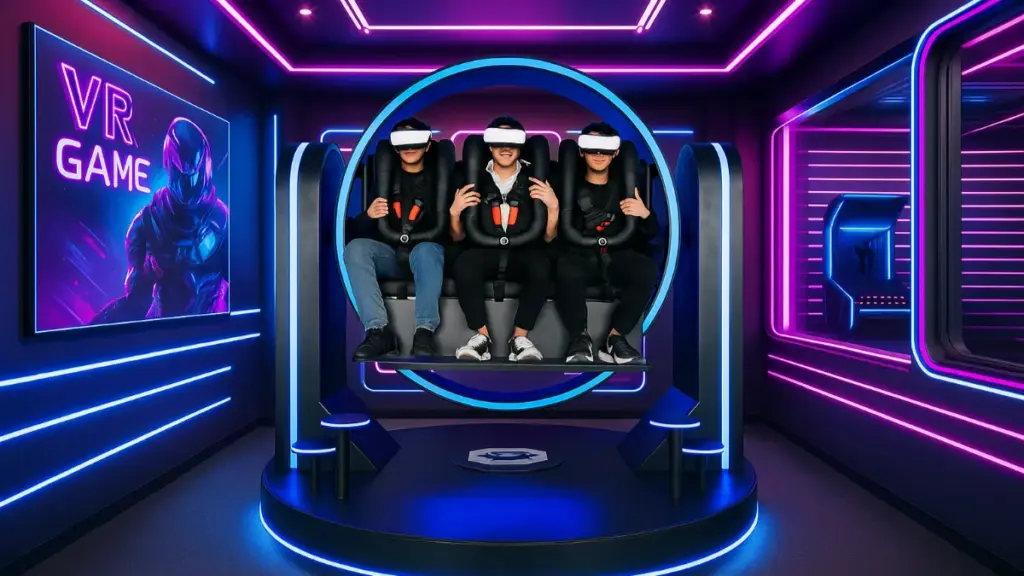
A 360° VR chair is an immersive device designed to synchronize user movement with virtual reality content. Also known as a virtual reality chair simulator or VR chair 360, this equipment allows users to rotate and tilt in multiple directions while experiencing VR visuals.
The chair is mounted on a motorized platform that can spin a full 360 degrees, giving the user freedom to turn in any direction. This is essential for experiences that require panoramic motion, such as flying simulations or roller coaster rides.
How Does a 360° VR Chair Work?
The functioning of a 360° VR chair relies on a seamless interaction between hardware components and software controls. The main elements include:
- A motorized base capable of rotating and tilting
- Sensors that track the chair’s position and movements
- A control system that interprets game data and sends commands
- A VR headset delivering the visual experience
When a user launches a compatible VR game, the software sends real-time signals to the chair’s control unit. The chair then moves accordingly, simulating physical sensations like acceleration, turns, or drops.
For example, during a roller coaster simulation, the motion chair VR mimics the gradual climb and sudden falls. This physical feedback aligns perfectly with what the VR headset displays, creating a convincing illusion of speed and height.
By combining these technologies, the VR 360 chair allows players to feel more connected to the virtual world than ever before.
Key Features of a 360° Rotating VR Chair
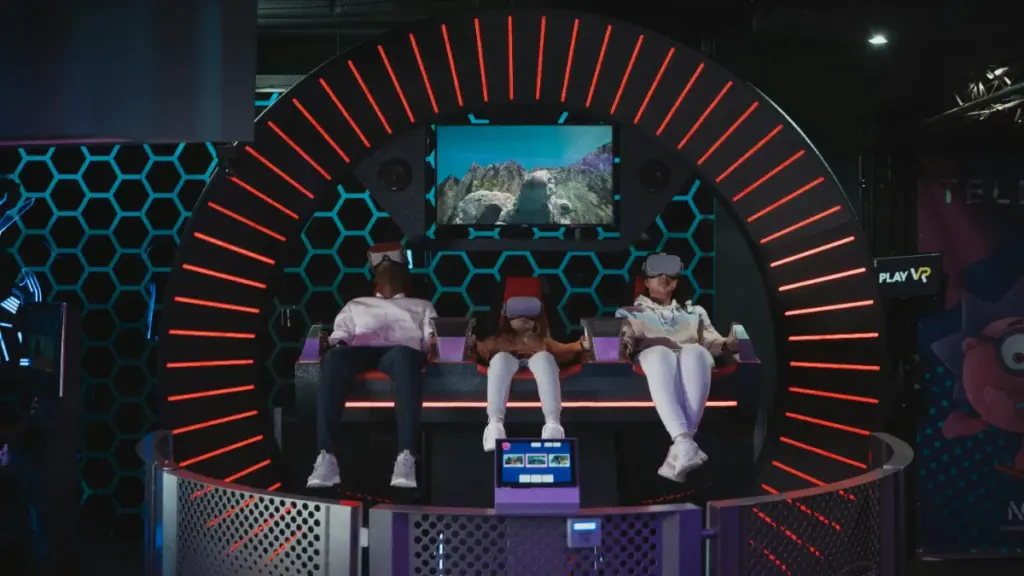
A 360° rotating VR chair is engineered to deliver a fully immersive experience that responds to user actions and in-game events. Below are some of the most distinctive features that make these chairs essential in the next generation of VR entertainment:
- 360-Degree Rotational Platform: The chair supports full circular movement, allowing users to turn freely in any direction. This improves immersion in experiences that require spatial awareness, such as flight or racing simulations.
- Multi-Axis Motion System: High-end models like YHY’s 360 VR arcade gaming machines offer tilting, pitching, and rolling capabilities. These dynamic movements synchronize with in-game actions to deliver more realistic feedback. Unlike traditional 3DOF platforms that rely solely on basic up-and-down axis movement, YHY’s proprietary 3DOF motion system enables more precise and multidirectional motion control.
- Real-Time Motion Synchronization: The system responds instantly to VR content through a responsive control interface. Smooth motion tracking enhances gameplay realism and minimizes discomfort.
- Safety and Ergonomic Design: Built with strong materials and equipped with safety belts, these chairs are designed to handle intense motion while keeping users secure and comfortable.
- Wide VR Headset Compatibility: Most VR chair 360 units work seamlessly with mainstream headsets like Oculus, HTC, and Pico. This ensures flexibility in content selection and simplifies operational setup.
These features define what makes a 360 degree motion simulator effective in both entertainment and professional VR applications.
Top Use Cases and Applications of 360° VR Chairs
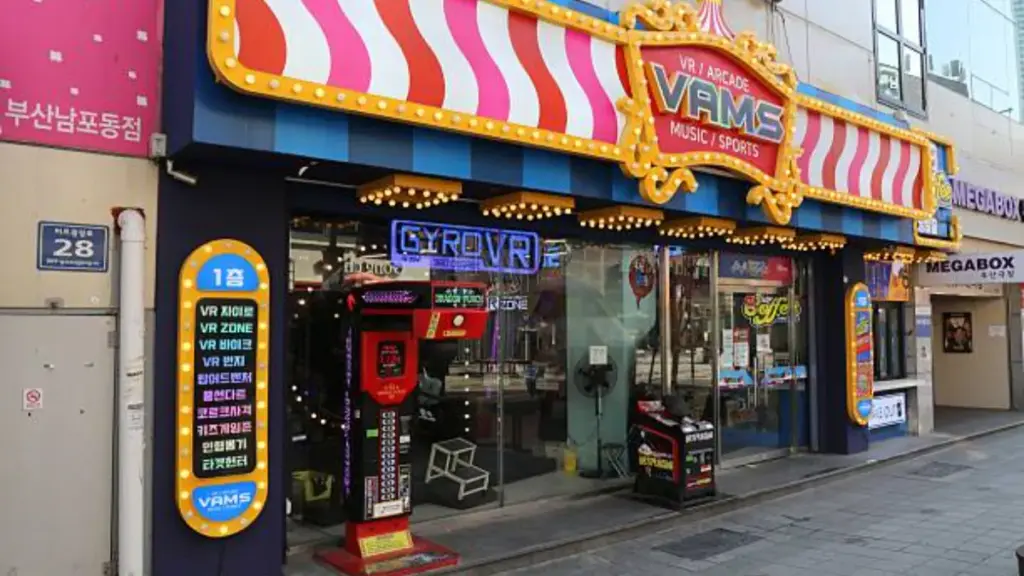
The versatility of the 360° VR chair extends far beyond gaming. Its immersive qualities make it ideal for a range of applications across different industries. Below are the most common use cases where this technology excels:
VR Arcades and Gaming Centers
These VR arcade machines are a staple in modern VR arcades. Paired with curated content, they provide intense, memorable experiences that encourage repeat visits. Whether it’s a spaceship battle or a haunted mine cart ride, the motion chair VR brings games to life.
Amusement Parks and Attractions
Many parks use VR 360 chairs as compact, high-impact attractions. Compared to full-size rides, they take up less space and are easier to maintain. When installed with roller coaster simulator content, they replicate theme park thrills in a fraction of the area.
Educational and Training Simulators
In education, VR chairs are used for flight training, driving practice, or medical simulations. The motion feedback helps learners build muscle memory and spatial awareness, making the training process more effective.
Real Estate and Tourism Showcases
Some companies use virtual reality chair simulator setups to showcase architectural designs or travel destinations. Clients can explore new environments in a fully immersive way, adding emotional value to the presentation.
Corporate Events and Product Launches
Brands increasingly use immersive VR experiences to engage audiences at trade shows and exhibitions. A 360 rotating chair can host interactive product demos, storytelling experiences, or branded mini-games that draw crowds and leave lasting impressions.
360° VR Chair vs. Traditional VR Motion Simulators
While both 360° VR chairs and traditional VR simulators aim to enhance immersion, their designs, capabilities, and use cases differ significantly. Understanding these differences helps businesses and users choose the right equipment.
| Feature | 360° VR Chair | Traditional VR Motion Simulator |
| Rotation Capability | Full 360-degree rotation with panoramic movement | Typically limited to 3 axes (pitch, roll, yaw), often without full rotation |
| Footprint | Generally larger, requiring more installation space | Compact, suitable for arcades and small venues |
| Movement Range | Supports dynamic spinning, tilting, and vibration | Focuses on smooth, controlled movements with fewer degrees of freedom |
| Player Availability | Usually 1 player per unit | Available in both single and multi-player formats (up to 4 or more) |
| Game Compatibility | Optimized for interactive, fast-paced VR games (e.g., roller coatser, shooting, racing, flying) | Commonly used for cinematic rides, training simulations, and storytelling experiences |
| Customization Options | No | Yes |
Which One Should You Choose?
Choosing between a 360° VR chair and a traditional VR motion simulator depends on your operational goals:
- If your focus is arcade-style entertainment, where high player turnover, compact setup, and interactivity matter, the 360° VR chair is a strong fit.
- If you’re targeting cinematic VR experiences, educational applications, or need to support multiple players simultaneously, a traditional simulator may better suit your needs.
Ultimately, both platforms offer unique value. The key is to match the device’s capabilities with your intended audience, venue size, and content type. For a more detailed comparison between the two systems, check out our full guide on the Difference Between 360 Degree VR Chair and VR Motion Chair.